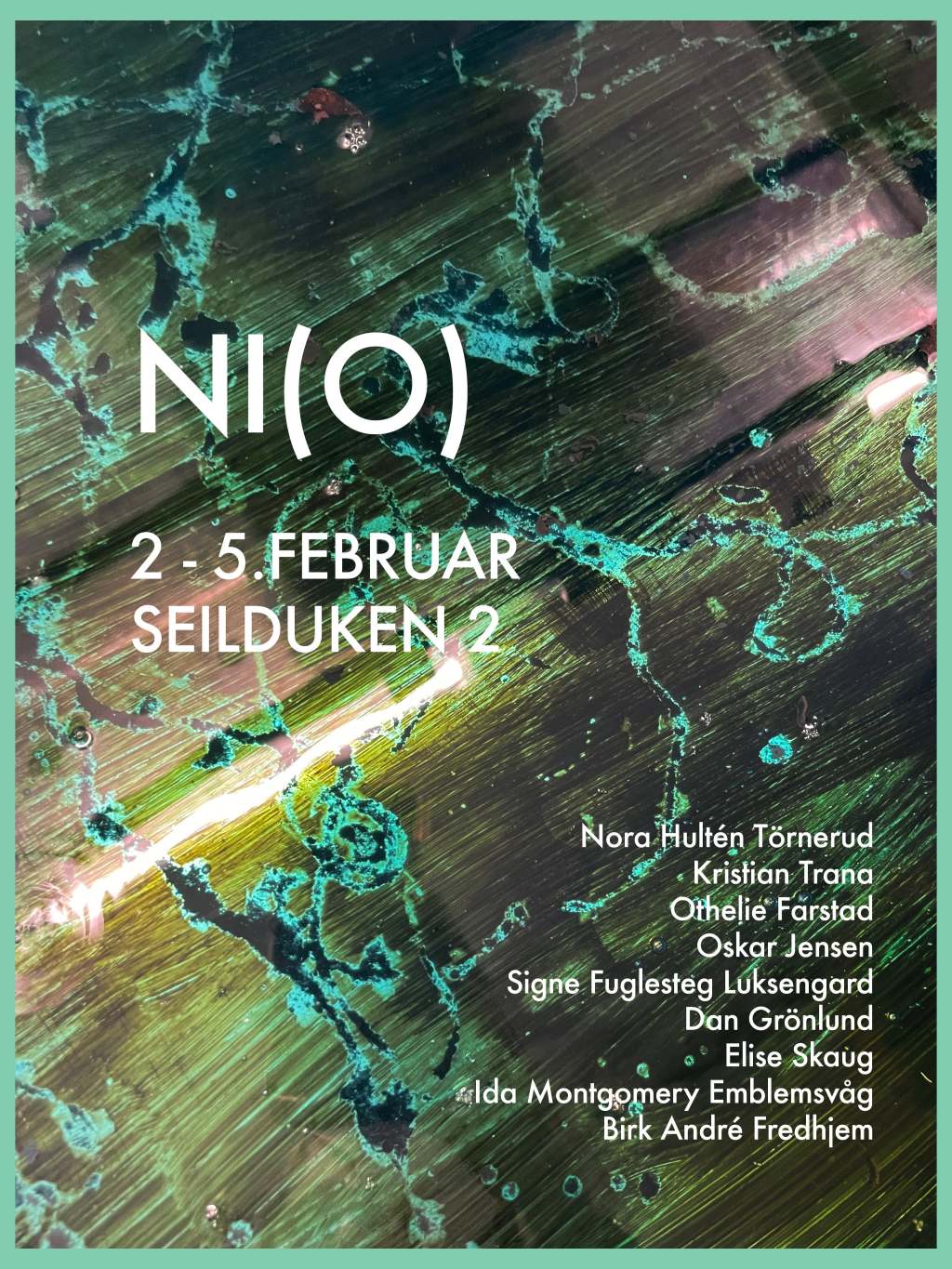
With the exhibition NI(O), we wanted to create a series of images where the variables in the expression come from all nine of us. The result is an artistic expression of movement, from the individual to the common. You didn’t know what the next person would do with your marks. As such the process became an exercise in letting go of the ego. Each person’s hand is involved, but is more or less clear in the finished work.
Presented by:
Elise M. Skaug, Birk André Fredhjem, Othelie Farstad, Oskar Jensen, Dan Grönlund, Signe Fuglesteg Luksengard, Nora Hultén Törnerud, Ida Monty Emblemsvåg, Kristian Trana.
Growing up at the turn of the millennium means growing up in an era of hypersocialization. Over the past thirty years, we as humans have encountered each other more frequently across societal divides. With the rise of the internet, access to information became further democratized; and we had
more encounters as well as more breakups.
We all have our stories; products of our time characterized by the struggle between the individual and the global. Anthony McGrew writes that globalization, simply explained, is “the widening, deepening, and speeding up of worldwide interconnectedness” (p. 16). I view politics and the interaction between states by looking at the individuals who constitute these interactions. States ar just land, however state leaders interact on behalf of the idea of the state. I seek to understand how the individual comes into being, where one stops and another begins by alternating between exploring global flows, regional and national determinations, and last but not least – the idea that individuals constitute these interactions. Thus, the boundaries of individual people and the geographical boundaries of states become two sides of the same coin for me. In my art, this takes different forms, but my practice largely revolves around the frictions of human encounters within and between the individual(s) and its effects.
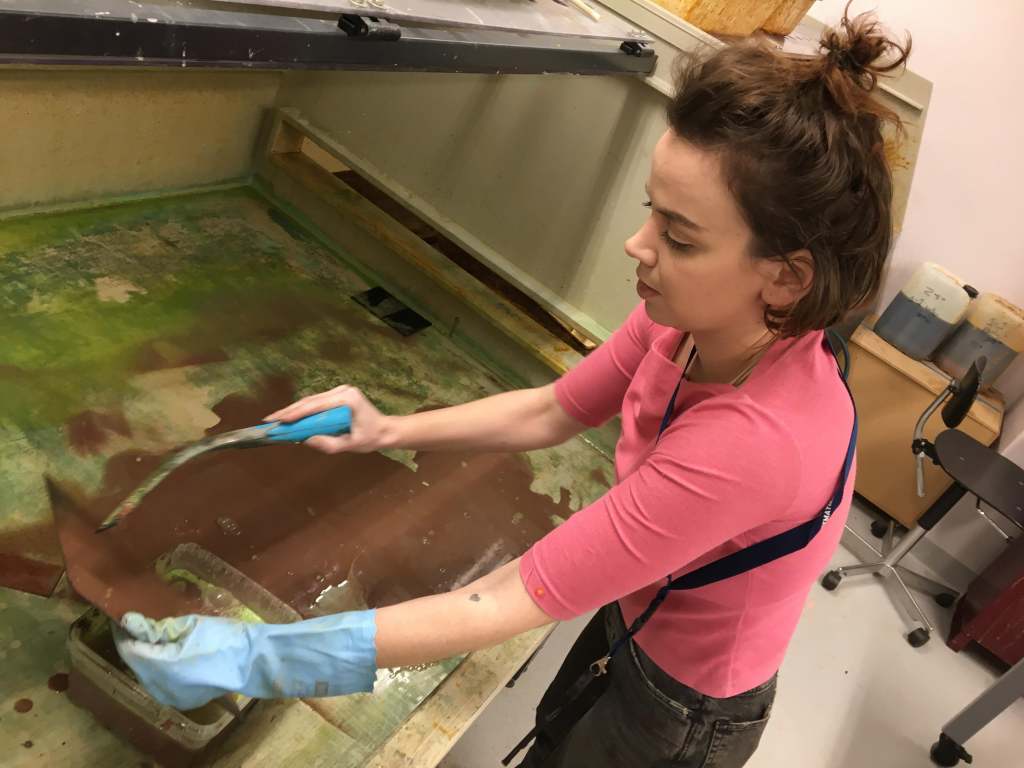
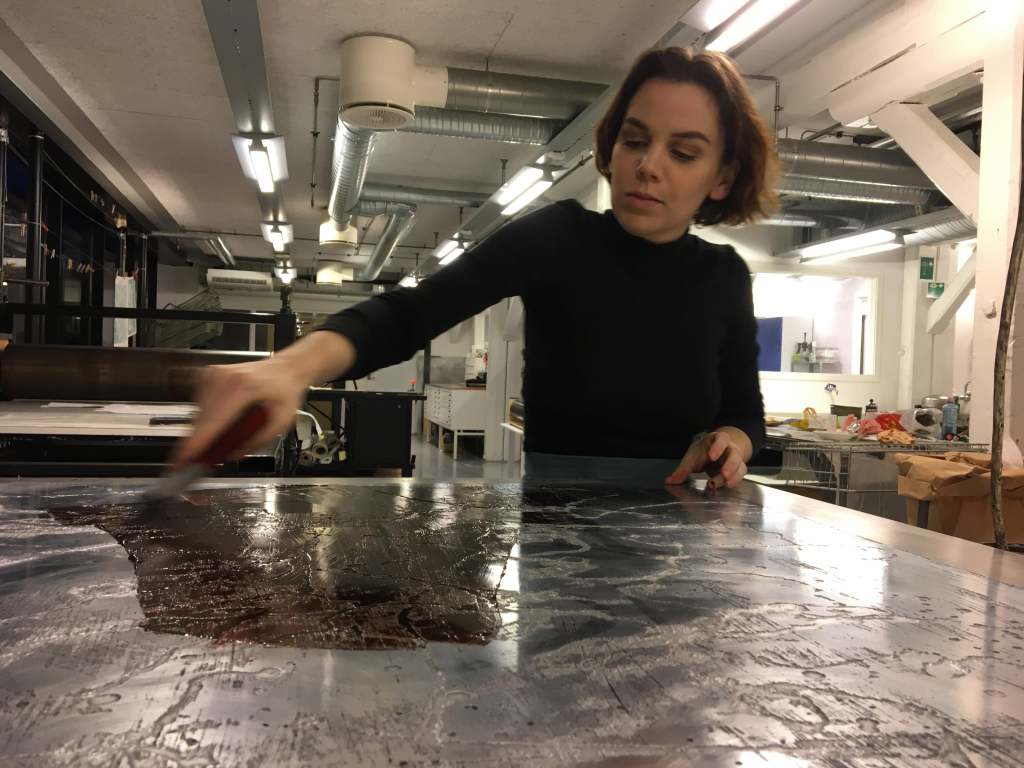
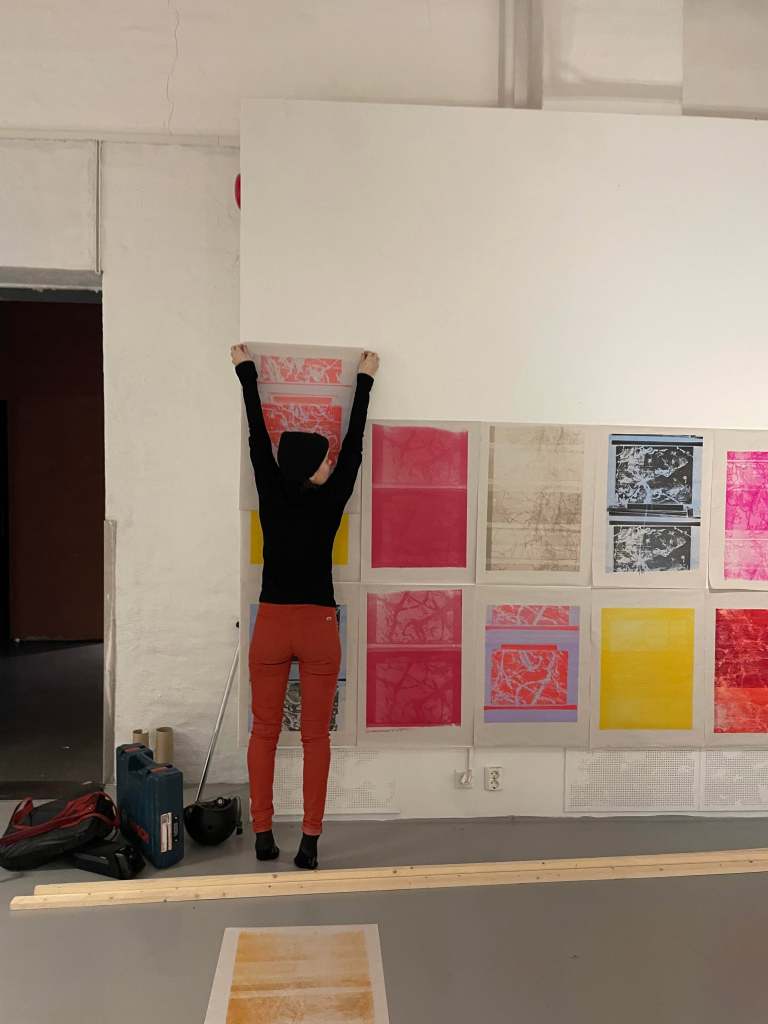
I was curious about how much of our own flair we would need to bring into the work in order to truly feel like it was ours versus how much of our own flair we would have to let go of to truly create something that was ours. Its: how do we move from “I´ve made this part” or “It wasn´t really my idea” to:
Color viscosity as a technique demands us to work in tandem. We all made these works together.
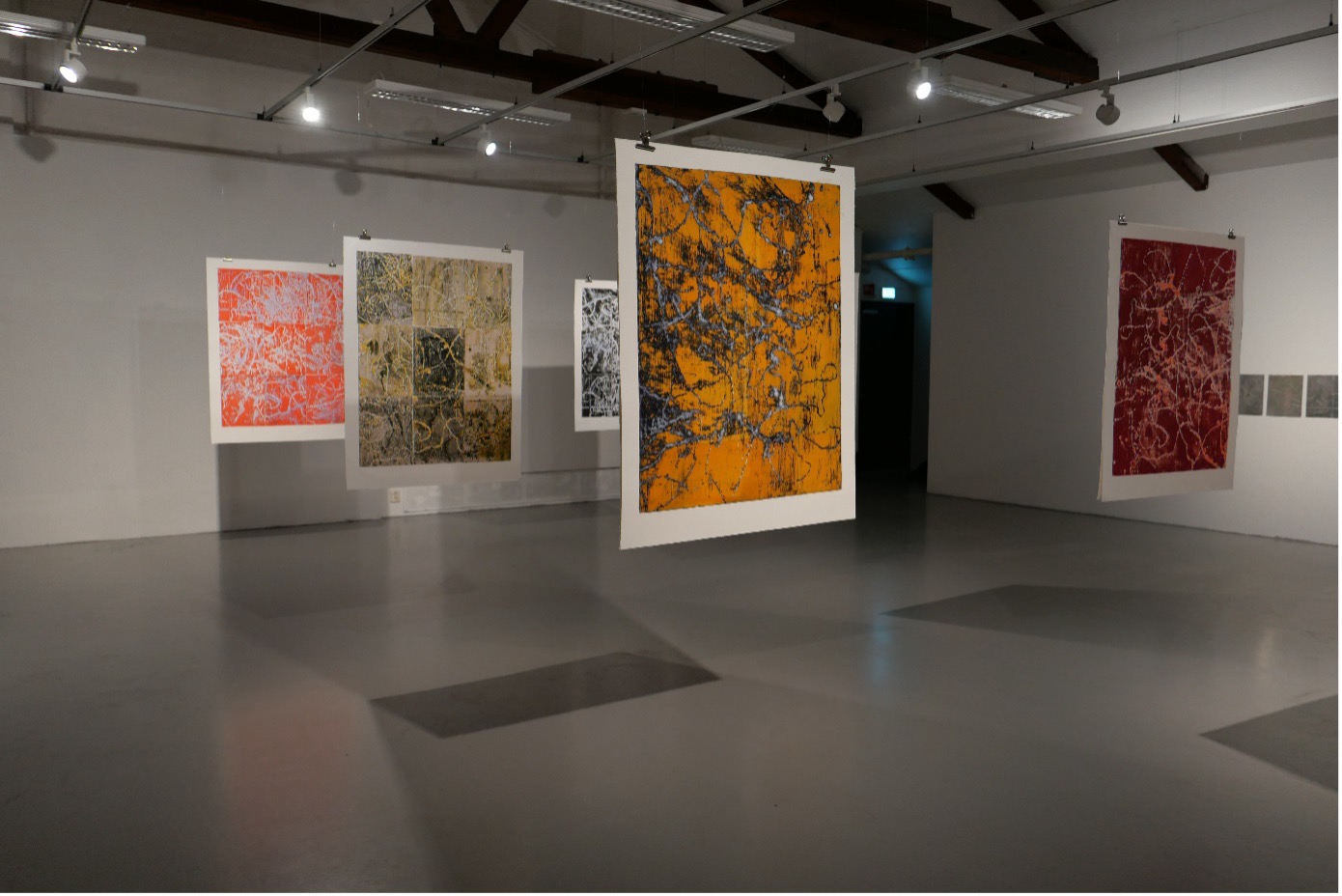
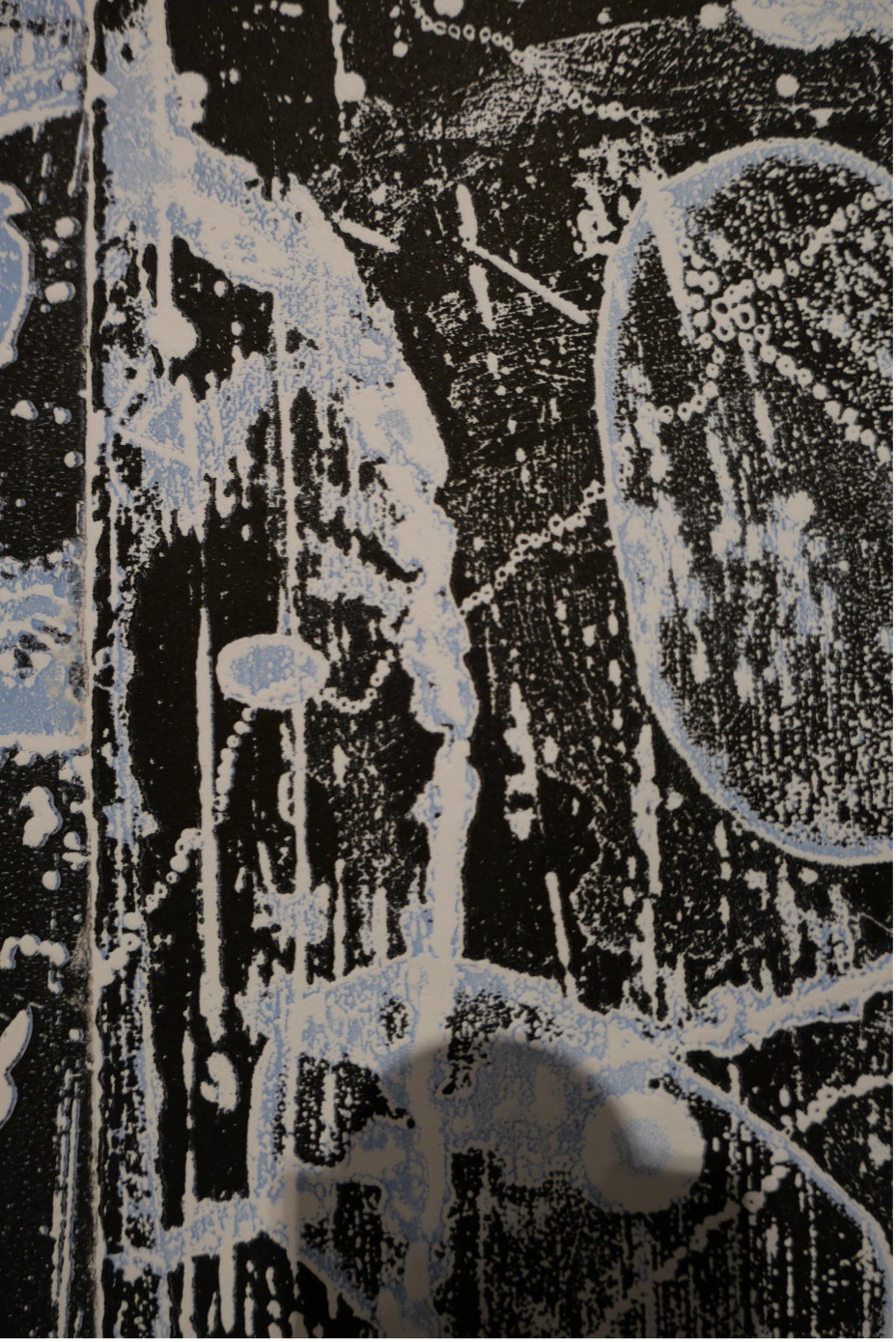
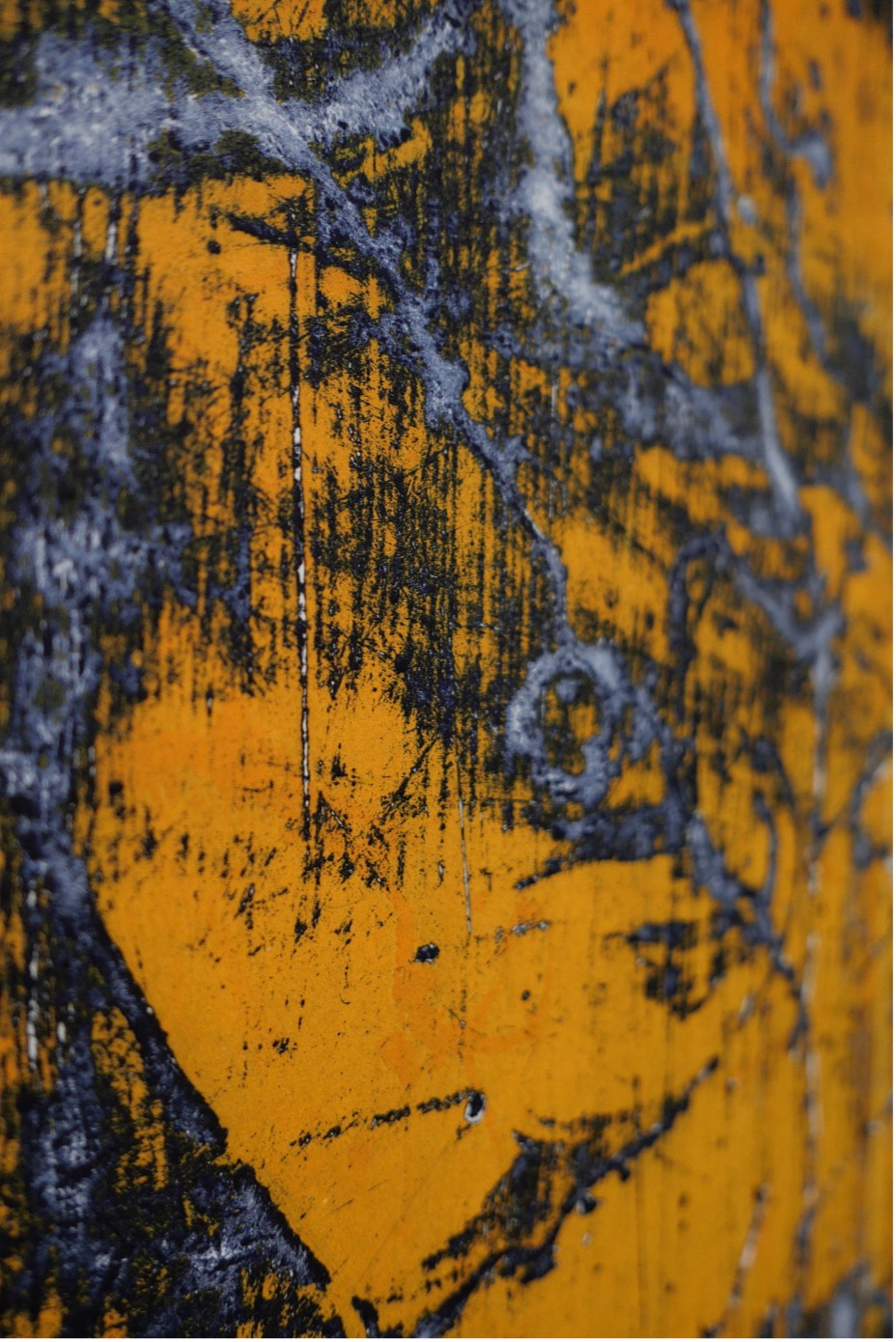
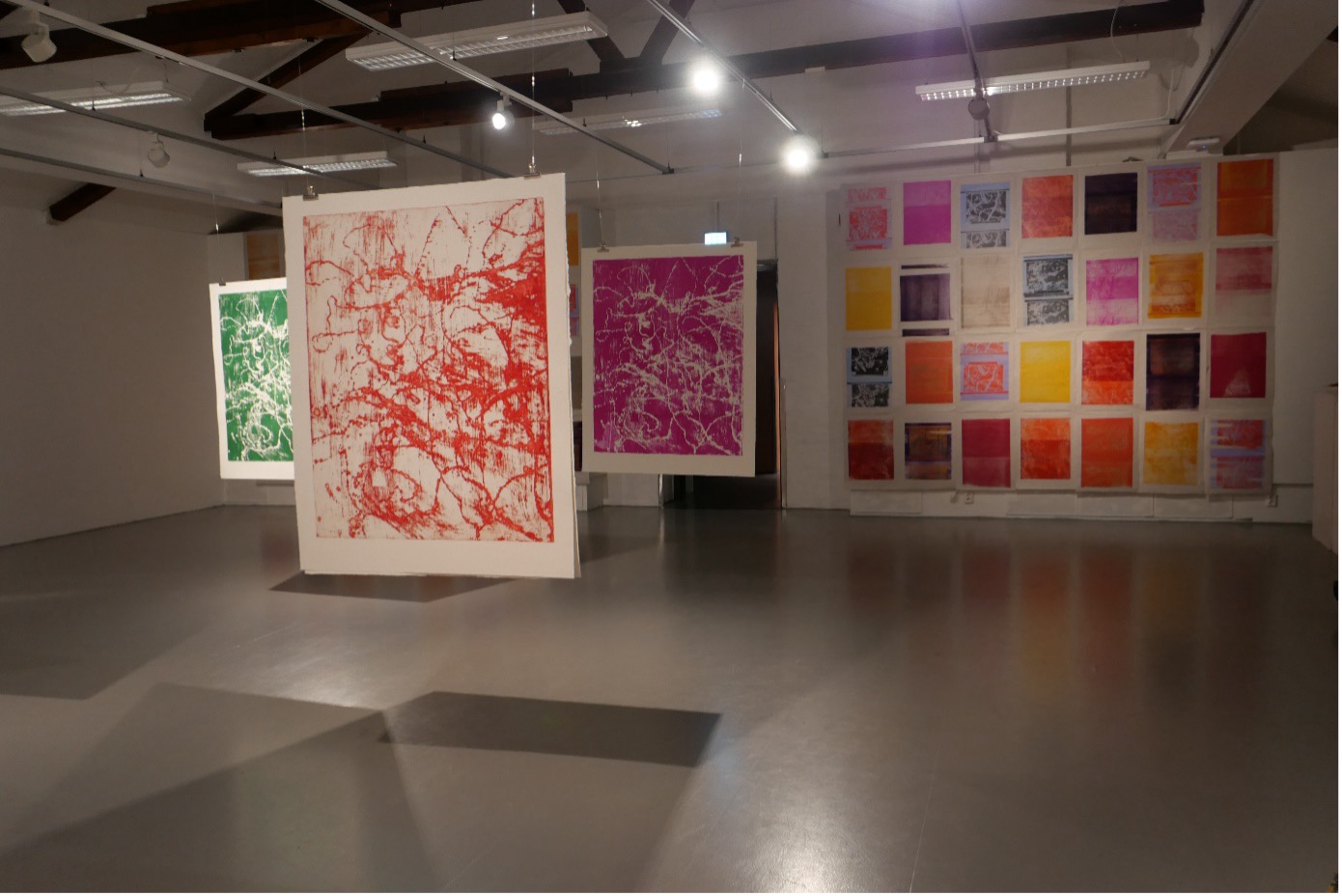
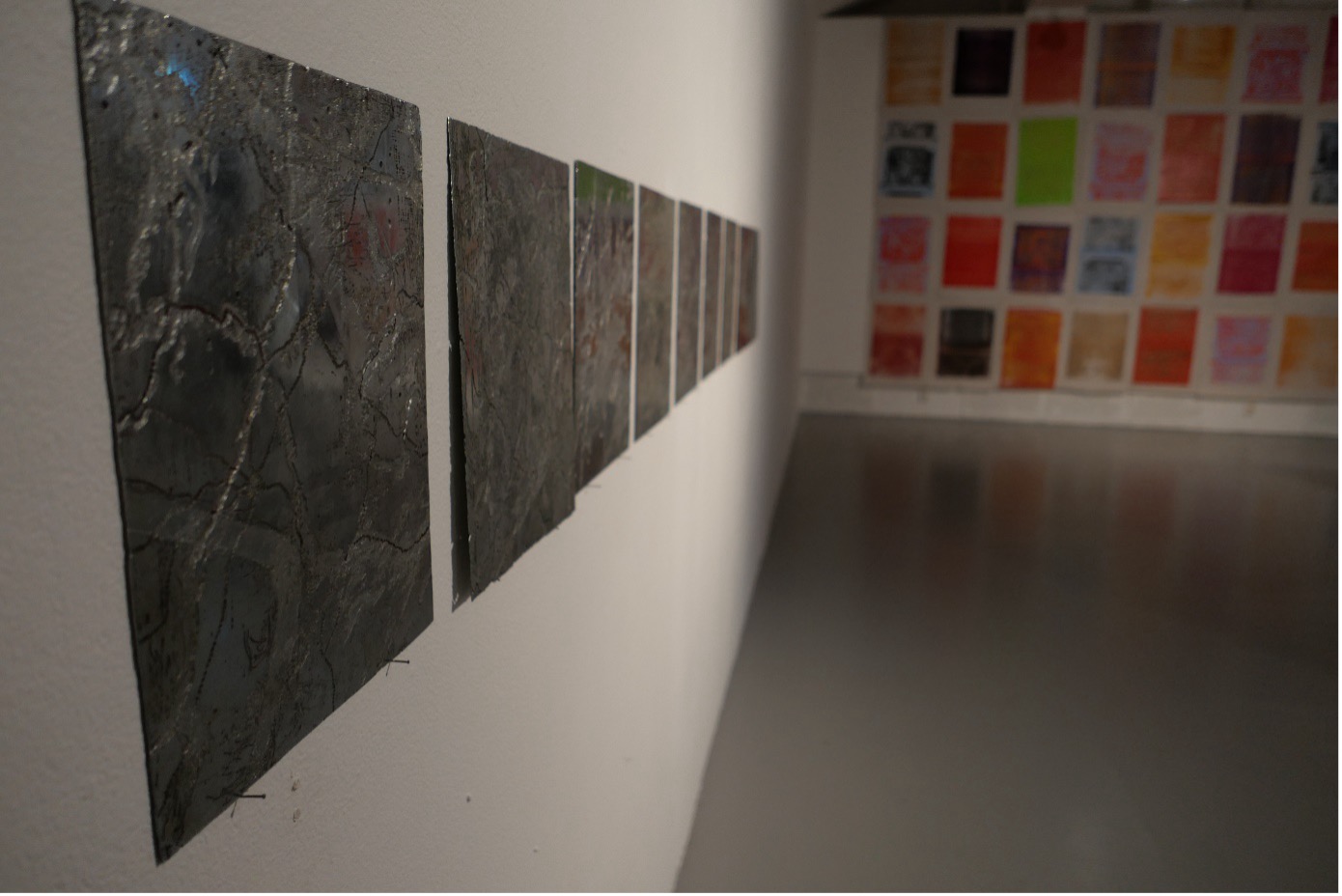
NI(O) explores the collective process where nine individual expressions interact.I saw it as a collective exploration of nine individuals’ artistic interactions with each other, the viscosity of color, and the workshop as a whole. The discussions and common meeting points are as important as the materials used as we collectively sought to retain each artist’s personal touch. However, each layer of etchings will be informed by what came before – and will likely change again. Just as any interaction between me and I, us and those over there, or two nations, never happens in a vacuum. Each color separation reflects this aggregated process.
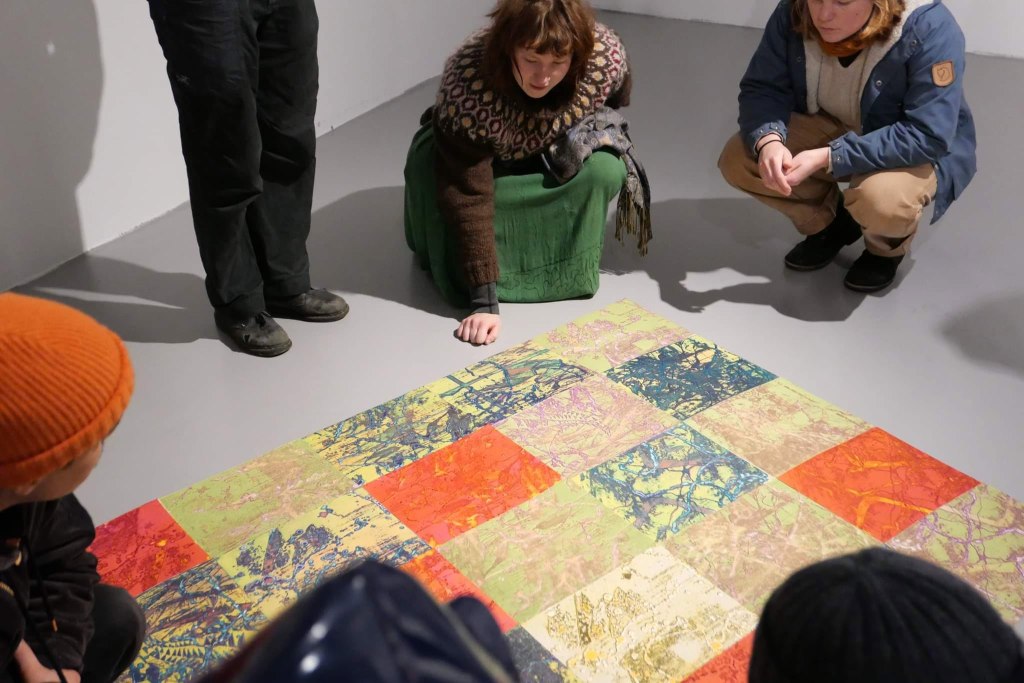
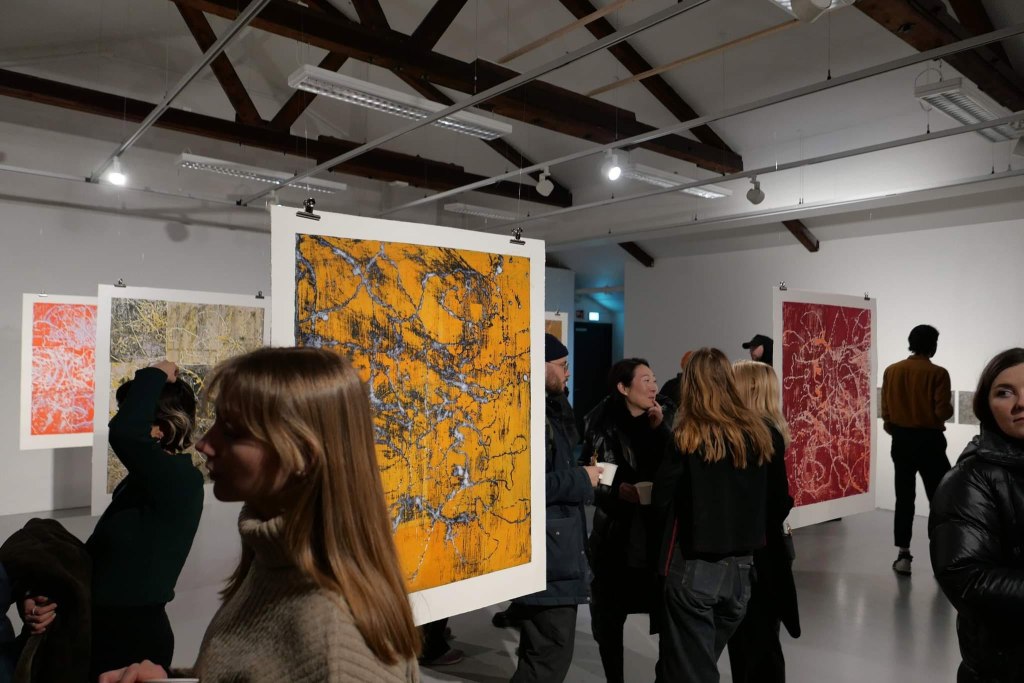
I also see the social performance or process as artistic medium. Perhaps especially in a world that is growing and shrinking at the same time, it is precisely the meeting places we are able to create that can stem further polarization and rivalry.
Joselit, D. (2016) Globalisation, Networks and the aggregate as form (3.utg). DZS-Grafik d.o.o: Slovenia
McGrew, A. (2017). The globalization of world politics An Introduction to International Relations (7. Utg). Oxford University Press: UK.


Leave a Reply